
Château de Beynac
Historic 12th-century cliffside castle featuring a Romanesque keep and Renaissance elements. It is perched on a limestone plateau and provides panoramic views of the Dordogne valley. Read more…
Opening hours
| Monday | 10:00 AM–7:00 PM |
| Tuesday | 10:00 AM–7:00 PM |
| Wednesday | 10:00 AM–7:00 PM |
| Thursday | 10:00 AM–7:00 PM |
| Friday | 10:00 AM–7:00 PM |
| Saturday | 10:00 AM–7:00 PM |
| Sunday | 10:00 AM–7:00 PM |
Admission
Free for children under 10. Last access 1 hour before closing. Group rates available upon reservation.


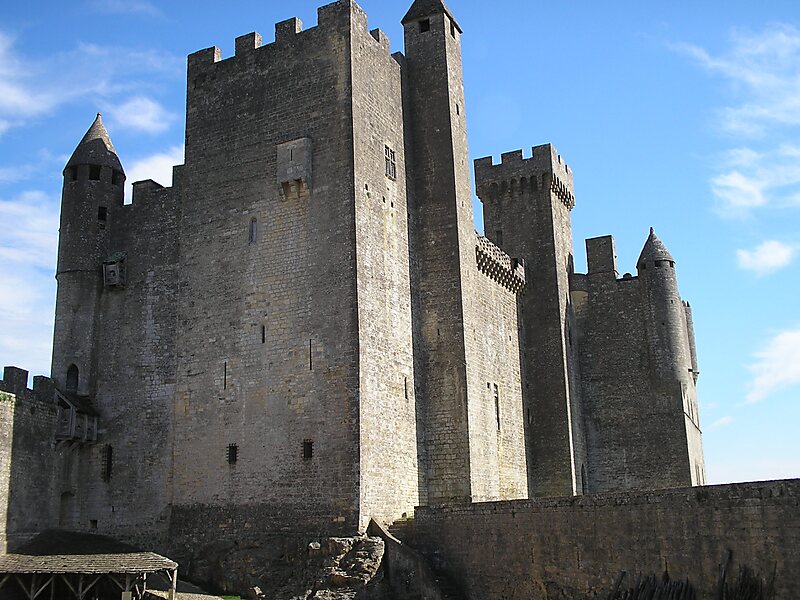

This well-preserved 12th-century fortress was built by the barons of Beynac to control the valley from its position on a limestone plateau. It served as a strategic French stronghold during the Hundred Years' War and is historically associated with figures such as Richard the Lionheart. The site is classified as a Monument Historique and is recognized as one of the best-preserved medieval castles in France.
The architecture includes a Romanesque keep, an oratory, and state rooms, with various residences remodeled over subsequent centuries to include Renaissance elements. The interior contains furnished rooms that provide insight into medieval life. Its location on a sheer cliff overlooking the Dordogne River offered significant defensive advantages during historical conflicts.
The castle is open to the public, allowing for the exploration of its ancient defenses and restored structures. A terrace provides panoramic views of the surrounding valley, a feature rated three stars by the Michelin Guide Vert. Additionally, the site has been utilized as a filming location for several motion pictures.
More information and contact

Plan Your Perfect Trip
Create day-by-day itineraries, discover top attractions, and navigate with ease — on any device.
Or search for Tripomatic in the App Store or Google Play.