
Archaeological Site of Troy
Ancient city and national park featuring nine layers of archaeological history spanning over 4,000 years. It is recognized for its uninterrupted stratigraphy and as the setting for the legendary conflict described in Homer's Iliad. Read more…


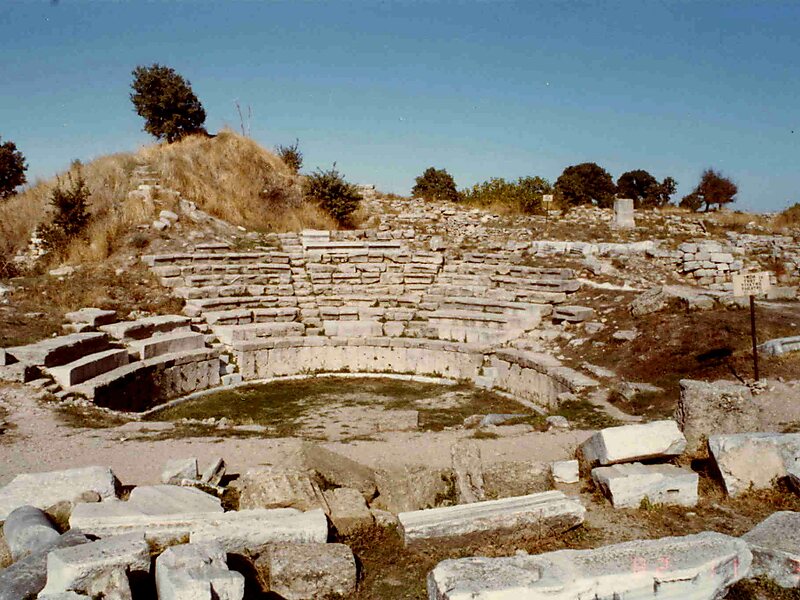

The site encompasses an ancient city with nine distinct layers of settlement, representing over 4,000 years of history from the Early Bronze Age (3000–2500 BC) through the Roman period. This uninterrupted stratigraphy serves as a primary benchmark for archaeological studies across Europe and the Aegean. The area transitioned from a small fortified city into a significant Bronze Age center and later evolved into Greek and Roman settlements.
Recognized as a UNESCO World Heritage Site since 1998, the location is famous as the setting for the Trojan War depicted in the Iliad, an epic poem by the ancient Greek author Homer. It demonstrates the first historical contact between Anatolian and Mediterranean civilizations. The ruins, situated on Hisarlık Hill, have inspired numerous artists and remain a subject of archaeological study regarding the historical existence of the city.
The site is designated as a national park and contains archaeological remains that showcase the convergence of civilizations from Anatolia, the Aegean, and the Balkans. Its strategic importance for trade and cultural exchange is evident from its earliest settlement through the Roman period. Rather than grand marble structures, the area serves as a memorial to past conflicts and successive city destructions. Discovered in the 1870s, the archaeological site is open to the public.
More information and contact

Plan Your Perfect Trip
Create day-by-day itineraries, discover top attractions, and navigate with ease — on any device.
Or search for Tripomatic in the App Store or Google Play.